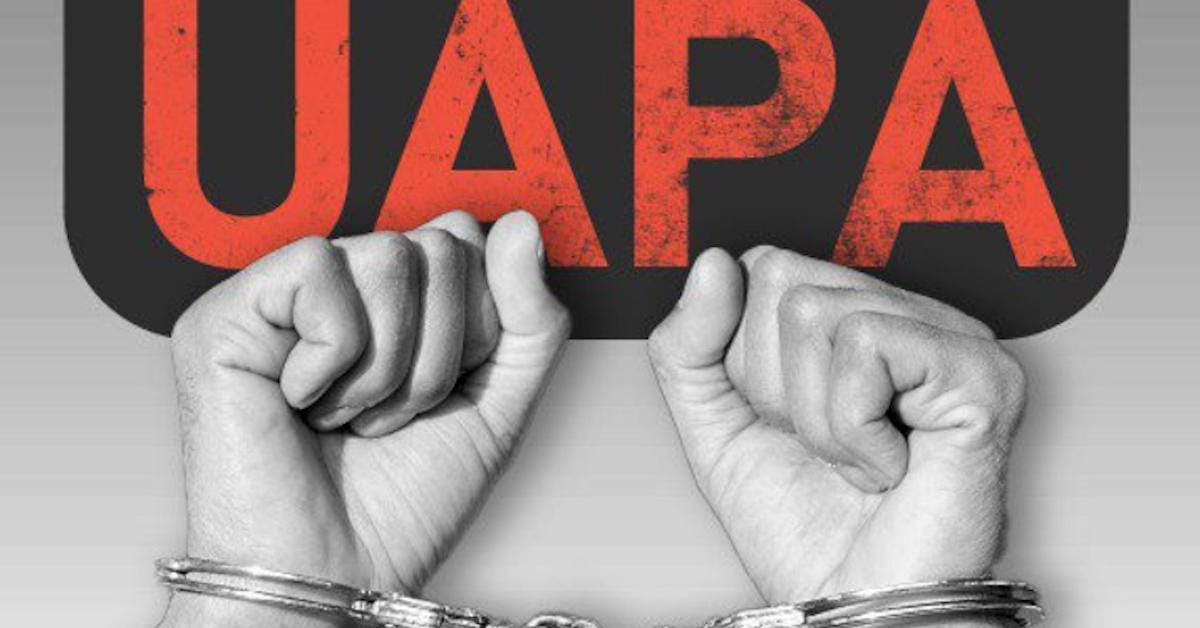
This landmark judgment in Gulfisha Fatima v. State (NCT of Delhi) revisits and clarifies the legal framework governing bail under Section 43D(5) of the Unlawful Activities (Prevention) Act, 1967, a provision that imposes stringent conditions on the grant of bail in cases involving allegations of terrorism and unlawful activities.
Accused-Specific Inquiry: Rejection of a Collective Approach
The Court reaffirmed that bail consideration under Section 43D(5) must be accused-specific and cannot proceed on a collective or omnibus evaluation of allegations. This principle finds strong support in Union of India v. K.A. Najeeb (2021) 3 SCC 713, where the Supreme Court held that even under special statutes, courts cannot completely shut their eyes to individual facts and circumstances of each accused.
The ruling cautions against mechanical reliance on the prosecution’s narrative and reiterates that courts must independently assess whether the accusations against a particular accused are supported by material that satisfies the “prima facie true” standard.
Differentiation Between Masterminds and Facilitators
A key doctrinal contribution of the ruling is its clear distinction between alleged masterminds and facilitators or peripheral actors. The Court held that facilitators cannot be treated at par with principal conspirators in the absence of cogent evidence demonstrating active participation, intent, or control.
This reasoning aligns with National Investigation Agency v. Thwaha Fasal (2021) 3 SCC 1, where the Supreme Court granted bail to accused persons alleged to be sympathizers, holding that mere association or ideological inclination without overt acts does not meet the threshold of Section 43D(5). The Court reiterated that membership or association alone is insufficient unless accompanied by acts furthering terrorist activities.
Prima Facie Test under Section 43D(5)
The judgment reiterates the principles laid down in National Investigation Agency v. Zahoor Ahmad Shah Watali (2019) 5 SCC 1, which remains the leading authority on bail under Section 43D(5). While courts are required to accept prosecution material at face value at the bail stage, the present ruling clarifies that such acceptance cannot be blind or uncritical. The material must still disclose a reasonable nexus between the accused and the alleged offence, particularly with respect to their specific role.
Prolonged Incarceration Not an Automatic Ground for Bail
The Court reaffirmed that prolonged incarceration alone does not automatically entitle an accused to bail under special statutes like the UAPA. However, it simultaneously acknowledged that indefinite detention without trial raises serious constitutional concerns.
In this context, reliance was placed on Union of India v. K.A. Najeeb, where the Supreme Court carved out a constitutional exception, holding that where the trial is unlikely to conclude within a reasonable time, courts may grant bail notwithstanding statutory embargoes, to uphold the right to personal liberty under Article 21 of the Constitution.
Balancing National Security and Personal Liberty
The ruling echoes the constitutional balance emphasized in Vernon Gonsalves v. State of Maharashtra (2023), where the Supreme Court stressed that stringent laws cannot be used to justify indiscriminate deprivation of liberty. Courts must ensure that national security concerns do not eclipse fundamental rights through unreasoned or role-agnostic detention.
Conclusion
By mandating role-based scrutiny, reinforcing the accused-specific inquiry, and clarifying the limits of prolonged incarceration as a ground for bail, this ruling strengthens procedural fairness under the UAPA without diluting statutory safeguards. It serves as a crucial reference point for courts, practitioners, and scholars navigating the complex intersection of anti-terror legislation and constitutional liberties.
Key Case Laws Cited
NIA v. Zahoor Ahmad Shah Watali, (2019) 5
Union of India v. K.A. Najeeb, (2021) 3
NIA v. Thwaha Fasal, (2021) 3
Vernon Gonsalves v. State of Maharashtra, (2023)
Arup Bhuyan v. State of Assam, (2011)
Vasantam Associates, Sada Vasantam Complex, West Bailey Rd, RPS More, Kaliket Nagar, Danapur, Bihar 801503
© 2026 The Vasantam Associates
Developed by Techomind