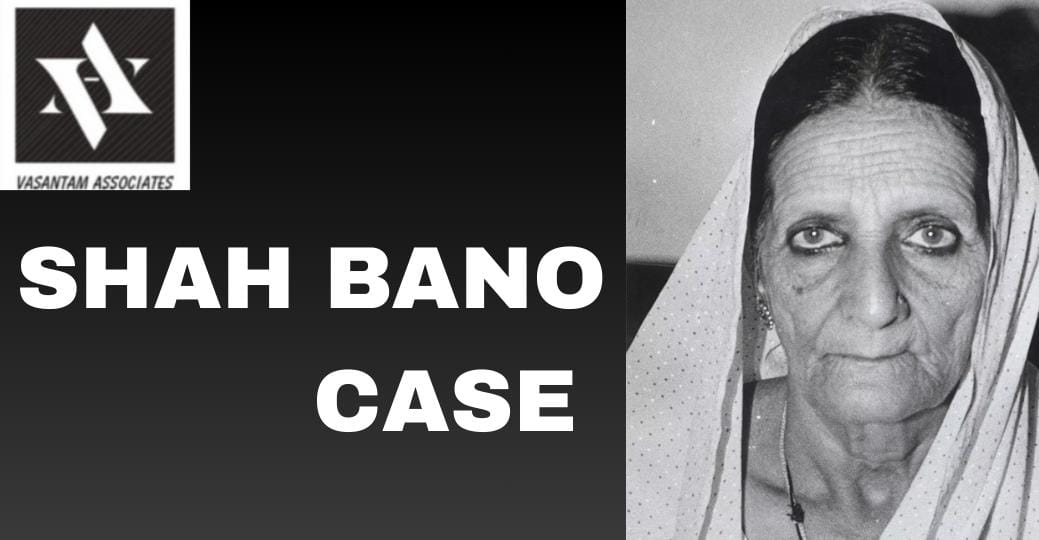
Case Title:- Mohd. Ahmed Khan v. Shah Bano Begum & Ors. (1985)
Supreme Court of India | Decided on 23 April 1985
I. Petitioner’s Grounds (Husband)
The petitioner, Mohd. Ahmed Khan, contended that he had lawfully divorced his wife, Shah Bano Begum, by pronouncing talaq under Muslim personal law and had duly paid mehr (dower) and maintenance during the iddat period. He argued that once the iddat period was over, he was under no legal obligation to maintain his divorced wife.
The petitioner further submitted that Section 125 of the Code of Criminal Procedure, 1973, being a secular provision, should not override Muslim personal law, which governed the parties. According to him, compelling a Muslim husband to pay maintenance beyond iddat would amount to interference with religious freedom protected under Article 25 of the Constitution.
He asserted that the Family Court and High Court erred in applying Section 125 CrPC to a Muslim divorcee, as personal law already provided a complete code for maintenance obligations.
II. Opposite Party’s Grounds (Wife)
The respondent, Shah Bano Begum, argued that she was driven out of her matrimonial home after decades of marriage and was left destitute without any means of livelihood. She contended that Section 125 CrPC was enacted as a measure of social justice to prevent vagrancy and applied irrespective of religion.
She maintained that the obligation of a husband to maintain his wife does not end merely by pronouncing divorce, especially when the wife is unable to maintain herself. The respondent emphasized that personal laws cannot defeat the constitutional mandate of gender justice and dignity.
She further argued that mehr is not a substitute for maintenance and that payment during iddat alone was grossly insufficient for survival, particularly for an elderly woman abandoned after long years of marriage.
III. Court’s Ruling and Reasoning
The Supreme Court undertook an in-depth examination of Section 125 CrPC and held that it is a secular, uniform provision applicable to all citizens regardless of religion. The Court observed that the object of Section 125 is to prevent destitution and vagrancy, and therefore it overrides personal law in case of conflict.
The Court categorically held that mehr cannot be considered a provision for future maintenance and that a Muslim husband’s liability under Section 125 does not cease after the iddat period if the divorced wife is unable to maintain herself.
The Court rejected the argument that Section 125 violates Article 25, holding that maintenance obligations are matters of social welfare, not religious practice. It emphasized that personal laws must be interpreted in harmony with constitutional values of equality and dignity.
IV. Order of the Court
The Supreme Court upheld the orders of the Magistrate and the High Court directing the petitioner to pay maintenance to Shah Bano Begum under Section 125 CrPC. The appeal was dismissed, and the wife’s right to maintenance was affirmed.
Conclusion
The Shah Bano judgment stands as a landmark ruling affirming that personal laws cannot override secular laws enacted for social justice. The decision reinforced the principle that divorced Muslim women are entitled to maintenance under Section 125 CrPC if they are unable to maintain themselves, irrespective of religious personal law. It marked a decisive step towards gender justice and constitutional supremacy.


Vasantam Associates, Sada Vasantam Complex, West Bailey Rd, RPS More, Kaliket Nagar, Danapur, Bihar 801503
© 2026 The Vasantam Associates
Developed by Techomind