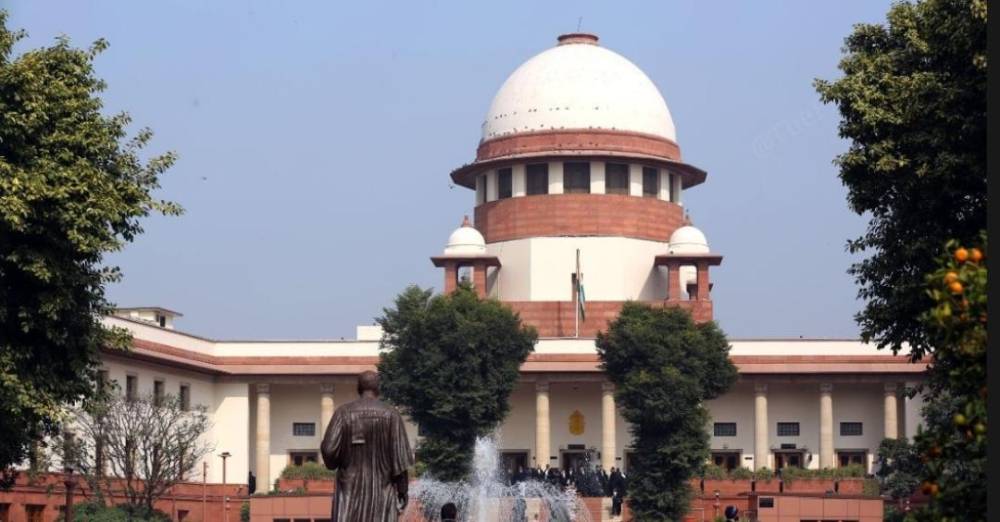
Cause Title: Ashwini Kumar Upadhyay v. Union Of India & Ors. and connected matters [W.P.(C) No. 943/2021]
The Supreme Court of India declined to issue additional directions to curb hate speech, firmly holding that the power to legislate rests exclusively with Parliament and not the judiciary. Reiterating the doctrine of separation of powers, the Court observed that while constitutional courts are empowered to interpret the law and ensure enforcement of fundamental rights, they cannot create offences or compel legislative action. At most, courts may highlight the need for reform, but the decision whether and how to legislate remains within the domain of the legislature.
Addressing concerns regarding the adequacy of the legal framework, the Court rejected the contention of any legislative vacuum. It noted that existing provisions under criminal law sufficiently cover offences related to hate speech, including acts that promote enmity, disturb public order, or outrage religious sentiments. The Court emphasized that the real deficiency lies in inconsistent and ineffective enforcement, rather than absence of statutory provisions.
The Bench highlighted that the procedural framework under the Code of Criminal Procedure and the Bharatiya Nagarik Suraksha Sanhita, 2023 provides a comprehensive mechanism to set criminal law in motion. It reiterated that registration of an FIR upon disclosure of a cognizable offence is mandatory, as settled in Lalita Kumari. Where an FIR is not registered, remedies are available, including approaching the Superintendent of Police, invoking the Magistrate’s jurisdiction under Section 156(3) CrPC [now Section 175 BNSS], or filing a private complaint.
Significantly, the Court clarified that an order directing investigation under Section 156(3) CrPC does not amount to “taking cognizance” of an offence. Consequently, the requirement of prior sanction does not apply at this stage and operates only at the stage of cognizance.
While declining further directions, the Court acknowledged that hate speech and rumour-mongering pose serious threats to fraternity, dignity, and constitutional order, underscoring the need for effective and impartial enforcement of existing laws.
Conclusions:

Vasantam Associates, Sada Vasantam Complex, West Bailey Rd, RPS More, Kaliket Nagar, Danapur, Bihar 801503
© 2026 The Vasantam Associates
Developed by Techomind